Ancient Remedies, Modern Disasters: How Indian and Filipino Families Are Getting Ready for Wildfire and Flood Season
Every summer, Priya Nair stocks her pantry the same way her grandmother did in Kerala — but instead of preparing for the Southwest Indian monsoon, she's bracing for Sacramento wildfire smoke. The tulsi leaves she keeps dried in a Mason jar aren't just for chai anymore. They're part of a respiratory care routine she pulls out when the AQI hits dangerous levels and her kids start coughing.
"My grandmother had a remedy for every kind of bad weather," Priya says. "I used to think that was just superstition. Now I think she was just paying attention."
Across the US, Indian and Filipino American families are discovering that the climate emergencies hitting hardest — the smoke-choked California summers, the hurricane-flooded Gulf Coast neighborhoods, the flash floods tearing through the Midwest — have a lot in common with the extreme seasonal weather their ancestors survived for generations. And the preparedness strategies those ancestors developed? They're turning out to be remarkably practical.
When Monsoon Wisdom Meets American Weather Reality
India and the Philippines are both countries shaped by extreme seasonal weather. The Indian subcontinent's monsoon cycle has driven agricultural, culinary, and medicinal traditions for thousands of years. The Philippines, sitting in one of the most typhoon-active zones on the planet, has its own deep cultural toolkit for riding out storms and recovering from floods.
Neither of those traditions maps perfectly onto a California wildfire or a Texas flood. But the underlying logic — how to protect your lungs, your gut, your immune system, and your mental health during extended periods of environmental stress — translates more than you might expect.
Rosario Dela Cruz, a Filipino American nurse practitioner based in Houston, has spent the last few years watching her patients — many of them Southeast Asian immigrants — navigate hurricane season with a mix of modern medicine and old-country instinct. "There's a real intelligence in some of these practices," she says. "They're not replacing medical care, but they fill in gaps that Western emergency prep just doesn't address."
Breathing Easier: Respiratory Remedies for Smoke Season
For Indian American families in wildfire zones, respiratory health is the front line. Ayurvedic tradition has an extensive pharmacopeia for lung support, and several of its key ingredients are already sitting in Indian grocery stores across the US.
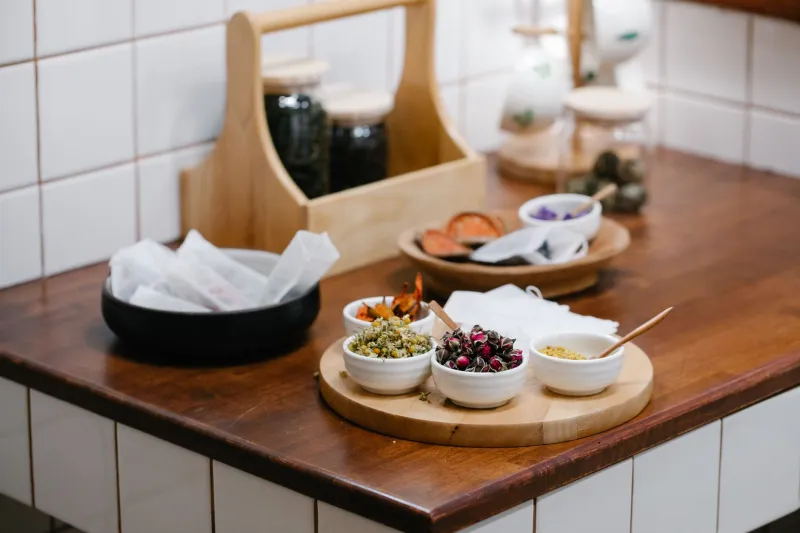
Tulsi — holy basil — is probably the most widely used. Dried or fresh, it's brewed into teas that families drink when air quality drops. Mulethi, or licorice root, is another common go-to, known in Ayurvedic practice for its soothing effect on irritated airways. Sitopaladi churna, a classical Ayurvedic powder blend typically containing bamboo silica, cardamom, cinnamon, and long pepper, is something Priya Nair keeps in her cabinet specifically for smoke season.
"I'm not saying it's a substitute for an N95," she laughs. "But when my son comes home from school smelling like smoke and his throat is scratchy, I make him a sitopaladi tea before bed and it genuinely helps him sleep."
On the Filipino side, oregano — not the Italian variety, but the Philippine oregano, known as Coleus amboinicus — has long been used as a cough and respiratory remedy. Filipino American households in Los Angeles and the Bay Area have been growing it in backyard pots, harvesting leaves to steep when wildfire season hits.
Flood Season and the Gut-Immune Connection
Floods create a different set of health challenges. Contaminated water, disrupted food supplies, mold exposure, and the physical stress of displacement all hit the immune system hard. Both Indian and Filipino traditional medicine place enormous emphasis on gut health as the foundation of overall immunity — and that framing is increasingly validated by modern research.
For Filipino families, luyang dilaw — turmeric — is the cornerstone of flood-season recovery. Used in everything from gata-based soups to simple hot drinks with honey, it shows up in Filipino American kitchens as both food and medicine during stressful seasons. Lagundi, a Philippine shrub with documented anti-inflammatory and bronchodilatory properties, is harder to find fresh in the US but is available in capsule form at many Filipino specialty stores.
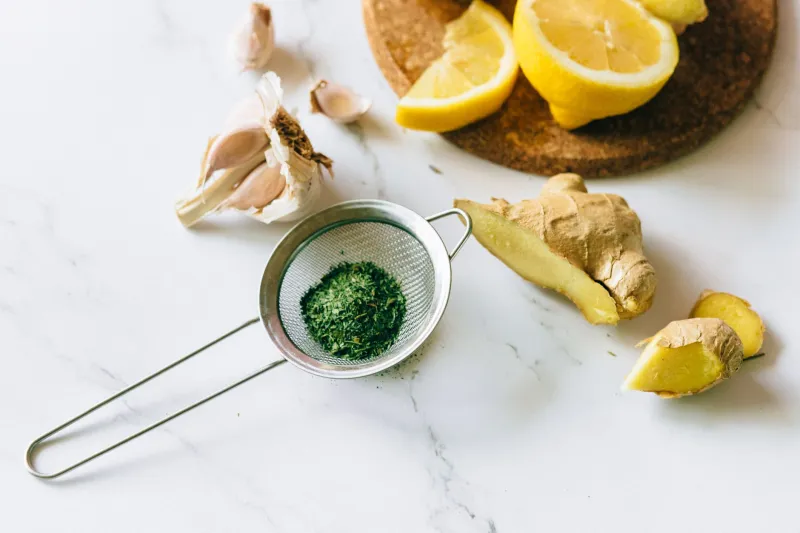
Indian households lean heavily on their own turmeric traditions — golden milk, kadha (a spiced decoction typically made with ginger, black pepper, cloves, and tulsi), and triphala for digestive resilience. Ginger, in particular, pulls double duty: it supports digestion and has well-documented anti-nausea properties that become relevant when food safety is compromised during flood recovery.
"After Harvey, I made kadha every morning for two weeks," says Meena Krishnamurthy, who lives outside Houston. "My family was stressed, we were eating whatever we could find, and I just needed something to anchor us. That was it."
DIY Protective Products People Are Actually Making
Beyond teas and tonics, some families are going further — making their own protective preparations for emergency kits.
Neem-based skin preparations are popular among Indian American families for flood season, when prolonged contact with contaminated water raises the risk of skin infections. Neem oil, diluted in a carrier oil, is applied to exposed skin as a barrier. It's not glamorous, but it's cheap, widely available at Indian grocery stores, and has genuine antimicrobial properties.
On the Filipino side, virgin coconut oil — a pantry staple in most Filipino American households anyway — does similar duty, used topically for cracked or damaged skin during extended weather events. Some families add a few drops of tea tree oil for extra antimicrobial coverage.
Several community members also mentioned making their own electrolyte drinks for heat emergencies. The Indian version uses nimbu pani (lemon water with salt and sugar) as a base. The Filipino version often centers on buko (young coconut water), which is available canned at most Asian grocery stores. Both are effective at preventing dehydration during extreme heat events — and both are a lot cheaper than commercial sports drinks.
The Mental Health Piece Nobody Talks About
Rosario Dela Cruz points to something that emergency prep guides almost never address: the psychological toll of climate disasters on immigrant families, many of whom are already carrying stress from displacement, family separation, and economic pressure.
"The rituals matter," she says. "Making a pot of arroz caldo for your family after a storm isn't just about nutrition. It's about saying: we're still here, we're still us, we're going to be okay."
Priya Nair agrees. "When I make kadha for my kids, I'm doing what my mother did, and what her mother did. That continuity is calming. It reminds you that people have gotten through hard things before."
Stocking the Monsoon Medicine Cabinet
If you want to build your own version of this preparedness pantry, the good news is that most of these ingredients are available at Indian and Filipino grocery stores across the US — and increasingly through specialty online retailers.
For respiratory support: dried tulsi, mulethi (licorice root), sitopaladi churna, and Philippine oregano (fresh or dried).
For immune and gut support: turmeric, ginger root (fresh or dried), black pepper, cloves, triphala, and lagundi capsules.
For topical protection: neem oil, virgin coconut oil, and tea tree oil.
For hydration: canned young coconut water, plus ingredients for nimbu pani.
None of this replaces a proper emergency kit — water, flashlights, documents, medications, the whole checklist. But it fills in a layer of care that standard emergency prep guides were never designed to provide. And for families who grew up watching their grandmothers navigate monsoon season with calm competence and a well-stocked kitchen, that layer feels less like an add-on and more like the whole point.