Wet Season Wisdom: How Indian and Filipino Gardeners Are Teaching American Cities to Grow Like the Tropics
Somewhere in a South Austin backyard, Priya Nair is misting her curry leaf seedlings with the focused attention of someone who has failed at this exact task four times before. She's tried grow lights, she's tried ceramic pots, she's tried the southern-facing window everyone on Reddit recommended. What finally worked? A humidity tent made from PVC pipe and greenhouse film, paired with a watering schedule borrowed from her grandmother's Karnataka kitchen garden — timed to mimic the rhythm of the southwest monsoon.
"My grandmother didn't think about any of this consciously," Priya says, laughing. "She just knew when to water, when to hold back, when the soil needed to breathe. I had to reverse-engineer all of that knowledge from scratch in Texas."
She's not alone. Across the US, Indian and Filipino immigrants are quietly becoming some of the most innovative urban farmers in the country — not because they set out to disrupt anything, but because they needed specific ingredients that American grocery stores simply don't carry, and they got tired of waiting.
The Ingredient Gap That Started Everything
Ask any Indian or Filipino home cook in the US about their biggest kitchen frustration, and the answer usually isn't the cooking itself — it's the sourcing. Malunggay (moringa) leaves that are actually fresh. Bitter melon that hasn't been sitting in a warehouse for two weeks. Drumstick pods that don't cost twelve dollars for three. Pandan that smells like pandan is supposed to smell.
For many diaspora families, the solution eventually became: grow it yourself.
But growing tropical and subtropical crops in places like Minneapolis, Denver, or even New Jersey isn't straightforward. These plants evolved in climates with distinct wet and dry seasons, high ambient humidity, and soil biology that looks nothing like what you'll find in a typical American backyard. Transplanting them requires more than just putting seeds in the ground and hoping.
That's where generations of inherited agricultural knowledge start to matter in ways nobody anticipated.
Reading the Rain: Monsoon Logic in a Drip System
In Kerala and in the Ilocos region of the Philippines, farmers have understood for centuries that water management isn't just about quantity — it's about rhythm. The monsoon doesn't just dump water; it cycles. Heavy rains are followed by warm, humid dry spells that allow soil to process nutrients before the next downpour arrives. Roots learn to reach deep during dry stretches and absorb efficiently during wet ones.
Urban diaspora gardeners in the US are recreating this cycle artificially, and the results are striking.
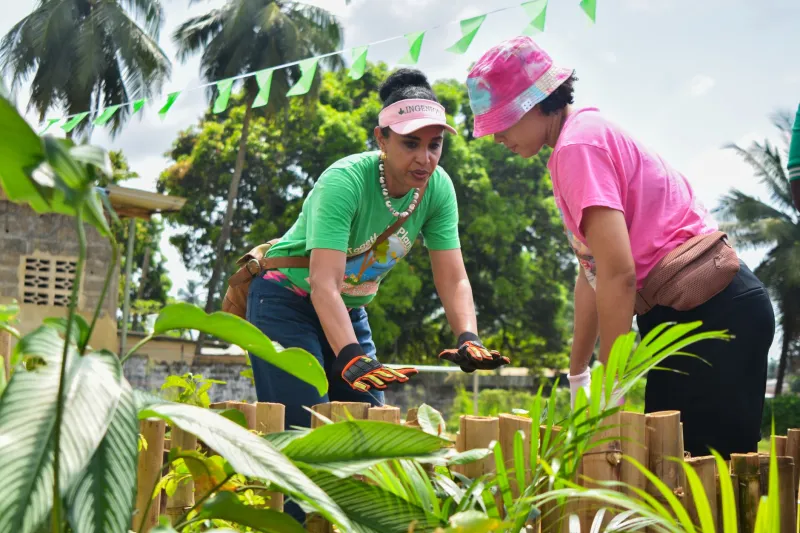
Ben Reyes, a Filipino-American community garden organizer in the Los Angeles area, has been experimenting with what he calls "pulse irrigation" — alternating deep watering sessions with intentional dry periods that stress the plants just enough to encourage deeper root development. He learned the underlying principle watching his lolo farm ampalaya (bitter melon) in Pangasinan, though he's adapted it using drip timers and moisture sensors his grandfather definitely didn't have access to.
"The plants respond the same way they would back home," Ben explains. "You're not fighting the plant's instincts. You're working with what it already knows how to do."
His community plot now produces ampalaya, sitaw (long beans), and kamote (sweet potato) consistently enough that he's started supplying a small Filipino grocery in Koreatown.
Humidity Is a Feature, Not a Bug
One of the biggest misconceptions American gardeners have about tropical crops is that they need heat. They do, but heat alone isn't enough. What they really need is warm, moist air — the kind that makes a Houston August feel like a sauna and that's almost impossible to replicate naturally in, say, Salt Lake City.
Diaspora growers have gotten creative here. Greenhouse setups range from elaborate insulated structures with evaporative coolers to simple plastic-draped frames over raised beds. Some gardeners cluster moisture-loving plants together to create microclimates where the plants themselves contribute to ambient humidity through transpiration. Others use gravel mulch and clay pots — techniques common in Indian kitchen gardens — to regulate soil temperature and slow moisture evaporation.
In Chicago, Deepa Krishnamurthy converted part of her garage into a year-round growing space for curry leaf trees and drumstick plants using a combination of LED grow lights and a small humidifier. Her setup cost less than five hundred dollars and now produces enough fresh curry leaves that she shares bunches with neighbors and sells small batches through a local Indian community group.
"In India, these trees just grow," she says. "Here, you have to build the tree a little piece of India to live in."
Soil Stories: What American Dirt Is Missing
Beyond water and humidity, the other major challenge is soil. Many tropical crops prefer slightly acidic, well-draining soil rich in organic matter — a profile that requires active management in most American growing zones.
Indian and Filipino farming traditions have long relied on composting practices that go well beyond throwing kitchen scraps in a bin. Coconut coir, rice hull ash, fermented plant matter, and fish-based amendments are all staples in traditional Southeast Asian and South Asian soil preparation. These materials are increasingly available in the US through specialty garden suppliers and — yes — through diaspora-focused online marketplaces.
Several IndiaPH community members have noted that sourcing these amendments has become easier in recent years, with more sellers offering rice hull ash and coconut coir in quantities suited for urban garden plots rather than large-scale farming operations.
What American Urban Farming Is Learning
The mainstream urban farming world is starting to notice. Community garden programs in cities with large South Asian and Filipino populations — the Bay Area, Jersey City, Houston, Seattle — are seeing requests for plot modifications that accommodate vertical growing structures, specific water schedules, and plant varieties that weren't on anyone's seed list five years ago.
Some agricultural extension programs have begun documenting these practices, recognizing that diaspora growers have essentially been conducting low-budget climate adaptation experiments for years. As American gardening zones shift due to climate change, the knowledge that helps a Filipina grandmother grow pechay in a Maryland winter becomes genuinely relevant to a much broader audience.
For the growers themselves, though, the motivation stays personal. It's about the smell of fresh curry leaves hitting hot oil. It's about ampalaya that actually tastes bitter the way it's supposed to. It's about handing a kid a malunggay leaf from a plant you grew yourself and watching them recognize something they've only ever tasted in their lola's cooking.
Priya puts it simply: "When I finally got my curry leaf tree to survive a Texas summer, I cried. It sounds ridiculous, but that plant is home."
That's the monsoon effect — not just a farming technique, but a whole philosophy of making something grow where it was never supposed to.