Forget the Algorithm: Why Diaspora Singles Are Turning Back to Aunties and Elders to Find the One
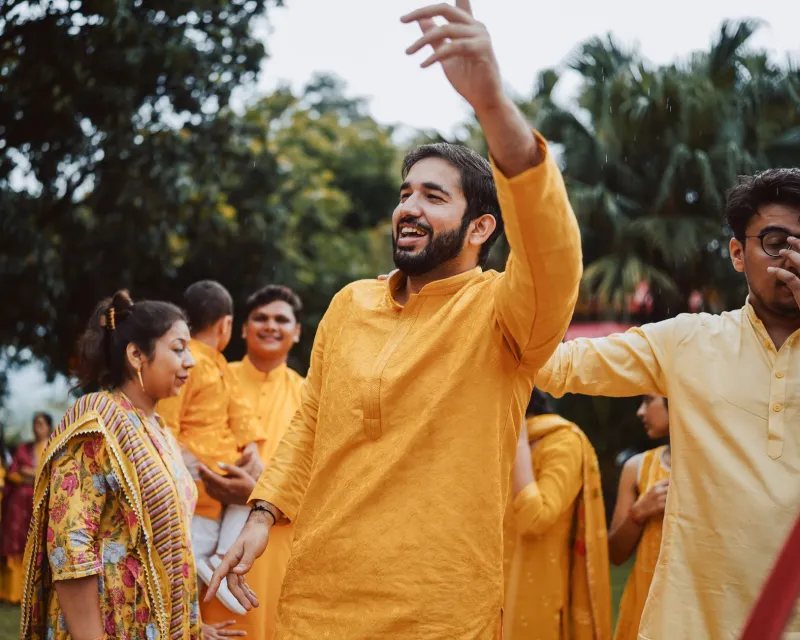
Somewhere between the fifth unanswered "hey" on Hinge and the third date with someone who thought biryani was "just Indian fried rice," a lot of South Asian and Filipino American singles hit a wall. Not a dramatic, swear-off-dating-forever kind of wall. More like a quiet, exhausted realization that something is missing — and that something has a name.
Cultural fluency. Shared memory. The unspoken shorthand of knowing what it means to take off your shoes at the door, to call every adult auntie or uncle, to feel that particular pull of obligation and love that only makes sense if you grew up inside it.
And increasingly, diaspora singles are looking for that not on their phones — but through the people their parents and grandparents trusted first.
Why the Apps Feel Hollow
To be fair, dating apps have done a lot of good. They expanded the dating pool, made geography less limiting, and gave introverts a fighting chance. But for many Indian and Filipino Americans, the experience has a persistent undertone of exhaustion.
Part of it is the sheer volume of mismatches — not just in personality, but in cultural baseline. Explaining why you can't just "skip your cousin's wedding" or why your mom's opinion on your partner actually does matter, over and over again on first dates, gets old fast. There's also something about the commodified nature of swipe culture that sits uneasily with communities where relationships have historically been built on trust networks, not individual consumer choice.
"I'm not anti-app," says one second-generation Punjabi woman living in the Chicago suburbs. "I've tried them all. But there's something about being introduced by someone who knows your family, who knows what kind of person you actually are — it just starts differently."
That "starting differently" is exactly what a growing number of community organizations, temple committees, and cultural associations across the US are banking on.
The Auntie Network, Formalized
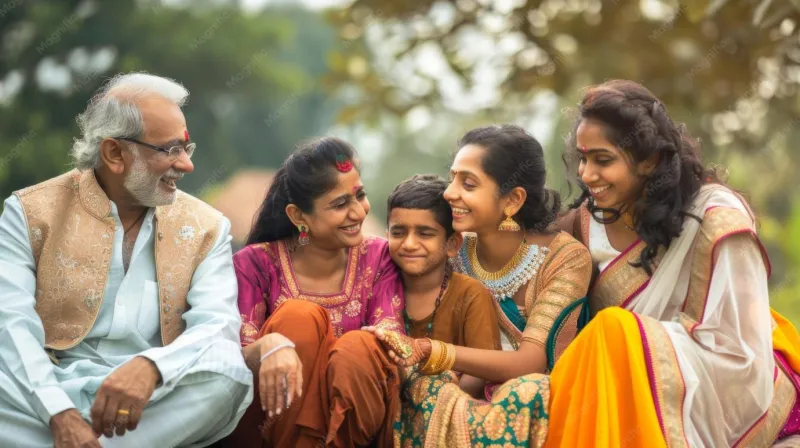
For generations, matchmaking in both Indian and Filipino communities operated through a rich informal infrastructure. In India, the pandit who presided over your naming ceremony might also be the one who quietly mentioned your daughter to a family three streets over. In the Philippines, the parish priest, the neighborhood kumadre, or a well-connected lola could set in motion a courtship that felt less like a transaction and more like a community blessing.
In America, those networks didn't disappear — they adapted. They moved into temple basements, community centers, church halls, and increasingly, into carefully managed group chats.
In cities like Fremont, Jersey City, Houston, and Daly City — places with dense Indian and Filipino populations — formal matchmaking programs have started to emerge under the umbrellas of cultural organizations. Some are run by religious institutions. Others are independent initiatives started by community elders who got tired of watching young people struggle.
The format varies. Some programs host structured mixers where attendees are pre-screened and introduced by a community coordinator who knows their background. Others operate more like a traditional referral system — someone vouches for you, someone vouches for the other person, and a trusted third party facilitates the introduction.
What they share is the element of accountability. When your matchmaker is your temple's cultural director or a family friend of twenty years, the stakes feel different. There's skin in the game on both sides.
Shared Heritage as a Starting Point, Not a Finish Line
It's worth being clear about what this kind of matchmaking is and isn't. It isn't about enforcing rigid cultural norms or narrowing the dating pool to a single caste or regional background. The community leaders doing this work are, by and large, operating with a much more expansive definition of compatibility than their predecessors.
What they're offering is a starting point — a shared cultural fluency that means you don't have to spend the first three months of a relationship explaining yourself. From there, individuals find their own way.
"We're not arranging marriages," clarifies a Filipino American community organizer in the Bay Area who runs quarterly social events for single Filipino and Filipino-adjacent professionals. "We're just creating the conditions for people to meet who might never have crossed paths otherwise. What happens after that is entirely up to them."
For Indian and Filipino Americans specifically, there's also a growing recognition that their communities have more in common than either always acknowledges — a shared experience of immigration, of straddling two worlds, of navigating family expectations while building independent lives. That common ground has made cross-cultural introductions between Indian and Filipino singles increasingly common in these spaces.
What Younger Generations Actually Want
Here's the thing that surprises some people: it's not just the elders pushing for this. Younger diaspora singles — millennials and Gen Z — are often the ones seeking it out.
For a generation that grew up watching their parents' arranged or semi-arranged marriages function with a kind of steadiness that seems elusive in the swipe era, there's a quiet reappraisal happening. That doesn't mean they want zero agency or that they're romanticizing a system that had real problems. It means they're interested in a middle path — one that combines the freedom of choosing their own partner with the wisdom of a community that knows them.
The language they use is telling. They talk about wanting someone who "gets it" without having to explain. They talk about not wanting to feel like they're auditioning their culture on every date. They talk about trust — specifically, the trust that comes from being introduced by someone with standing in their lives.
The Limits and the Possibilities
None of this is without friction. Community matchmaking networks can reproduce biases — about skin color, class, education, profession — that do real harm. The best practitioners are actively working against those tendencies, but it requires constant vigilance.
There's also the question of scale. Informal networks work because they're intimate. The moment they try to become platforms, something gets lost. The aunties and elders who make this work do so because of their specific relationships, their specific knowledge of specific people. That doesn't automate well.
But maybe that's the point. In a world where everything is optimized and scaled, there's something quietly radical about a system that insists on staying personal. That says: this person matters enough to be introduced by someone who actually knows them.
For diaspora singles navigating the strange terrain between two cultures, that kind of care is harder to find than it should be — and more valuable than any algorithm can calculate.
At IndiaPH Store, we believe the connections that matter most are the ones built on shared roots. Whether you're celebrating a milestone, stocking your kitchen, or dressing for a ceremony, we're here where India and the Philippines meet you.