Saturday Morning, Totally Different World: How Indian and Filipino Vendors Are Quietly Revolutionizing the American Farmers Market
There's a particular kind of magic that happens around 7 a.m. on a Saturday at the Ferry Building Farmers Market in San Francisco, or the Green City Market in Chicago, or the Eastern Market in Detroit. Regulars shuffle in clutching reusable totes, making their rounds past the usual suspects — jam vendors, flower growers, the guy with the really good goat cheese. And then, tucked between the apple orchard booth and the honey stand, something shifts.
A folding table covered in fresh methi leaves. Bundles of pandan tied with twine. A mason jar full of whole black cardamom pods that smell like a grandmother's kitchen somewhere far away.
For Indian and Filipino diaspora vendors setting up at farmers markets across the US, these stalls are more than a side hustle. They're a statement.
Not Your Average Booth
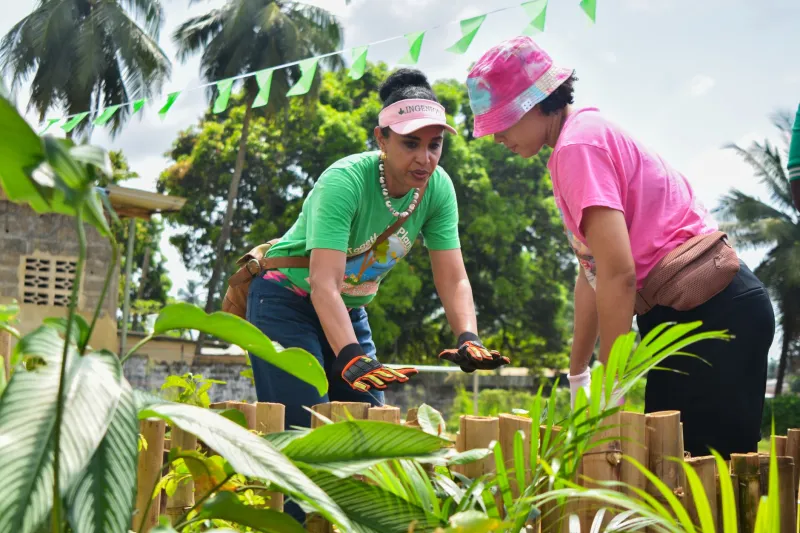
Ramya Krishnamurthy started selling at her local Nashville farmers market three years ago, initially just to offload the surplus from her home garden. She grew up watching her mother tend bitter melon vines in their Chennai apartment's small terrace, and when she finally had a yard in Tennessee, she planted everything she'd missed.
"The first week, I had maybe four customers who knew what they were looking at," she says. "By week six, I had a waitlist for fresh curry leaves."
That trajectory — confusion to cult following — is almost a rite of passage for South Asian and Filipino vendors entering mainstream market spaces. What starts as a way to share excess harvest or connect with other diaspora shoppers quickly becomes something much bigger: an informal classroom, a cultural exchange, and sometimes a genuinely thriving small business.
Jasmine Reyes, a second-generation Filipino American who runs a small-batch condiment operation out of Sacramento, started selling at her neighborhood market partly to introduce her kids to the entrepreneurial hustle her parents modeled back in Manila. Her table always features fresh calamansi when she can source them, dried salted fish tucked into labeled bags, and occasionally fresh banana blossoms that she has to explain to about half the people who stop.
"I keep a little card next to each item with a recipe suggestion," she says. "Not because people can't figure it out, but because it opens a conversation. And once someone's talking to you, they're probably buying."
The Biodiversity No One Talks About
Here's something that doesn't get nearly enough airtime in conversations about American food systems: India alone has over 50,000 documented varieties of rice. The Philippines is home to hundreds of indigenous vegetable crops, many of which have never seen the inside of a Whole Foods. When diaspora vendors bring heirloom bitter melon, purple yam, or ridge gourd to a farmers market, they're not just selling produce — they're introducing American shoppers to crop biodiversity that the conventional supply chain has almost entirely ignored.
This matters more than it might seem. As climate pressures push growers to think harder about resilient, drought-tolerant, and pest-resistant crops, the varieties that Indian and Filipino farmers have cultivated for centuries are suddenly very relevant. Moringa — long a staple in both Indian and Filipino cooking — is now being studied by agricultural researchers for its nutritional density and adaptability. Bitter melon has been the subject of ongoing diabetes research. Amaranth greens, common in many South Asian home gardens, thrive in heat that would wilt conventional spinach.
Vendors like Ramya aren't just farmers market novelties. They're, in a very real sense, stewards of agricultural knowledge that mainstream America is only beginning to catch up to.
Affordable Access in Unexpected Places
One of the more underappreciated dynamics at play here is economics. For diaspora shoppers, farmers markets have historically felt like luxury spaces — premium prices, unfamiliar produce, not exactly designed with their grocery list in mind. But when a vendor from the community sets up shop, that calculation changes.
A pound of fresh fenugreek leaves at an Indian grocery store in a big city might run you anywhere from $3 to $6, depending on freshness and availability. A home grower selling at a local market — someone who planted methi in their backyard specifically because they couldn't find it fresh anywhere nearby — might sell the same quantity for $2, and it was picked that morning.
For Filipino American shoppers in cities without a dedicated Asian grocery district, farmers markets with community vendors can be a genuine lifeline. Fresh pandan, taro leaves, long beans, and ube aren't just nice to have — they're the difference between cooking the food you grew up eating and settling for a substitute.
"I have a regular customer, a lola from Quezon City," Jasmine says, using the Filipino term of endearment for grandmother. "She drives 45 minutes every Saturday. Not because she can't find these things anywhere else, but because she trusts me. She knows where it came from."
Mainstream Curiosity Is Real — and Growing
It would be easy to frame this story as diaspora vendors serving diaspora shoppers, full stop. But that's only half the picture. The mainstream American farmers market crowd — the sourdough people, the seasonal-eating people, the people who've watched enough cooking competition shows to be genuinely curious — is paying attention.
Chefs from non-South Asian and non-Filipino backgrounds are increasingly sourcing from these vendors. Home cooks who discovered turmeric through a wellness trend are now asking about fresh turmeric root versus dried, and what the difference actually tastes like. People who tried palak paneer at a restaurant are looking for methi to experiment at home.
Ramya keeps a small recipe card display at her booth and says she goes through about 200 cards a weekend. Her top three most-requested? What to do with fresh curry leaves, how to cook bitter melon so it's not too bitter, and — her personal favorite — a simple rasam recipe she wrote up herself.
"Rasam is basically the original bone broth," she says with a laugh. "I tell people that and they immediately want to know everything."
What This Looks Like Going Forward
Farmers markets are slowly starting to reflect this shift in intentional ways. Some markets in cities with large South Asian and Filipino populations — the Bay Area, New Jersey, Chicago, the Seattle metro area — have begun actively recruiting diaspora vendors as part of broader diversity initiatives. A few have introduced signage in multiple languages. Others have created dedicated "heritage produce" sections.
It's incremental. There are still real barriers: vendor fees that can be prohibitive for small growers, application processes that favor established operations, and an overall market culture that sometimes still treats non-European produce as exotic rather than essential.
But the vendors showing up every Saturday with their bitter melon and their pandan and their handwritten recipe cards aren't waiting for an invitation. They're already there, already building regulars, already changing what American farmers markets look like — one unfamiliar vegetable at a time.
For communities that have spent years driving across town to find the right kind of dal or the freshest calamansi, that's not a small thing. That's everything.