Built for the Tropics: How Indian and Filipino Homeowners Are Making American Houses Actually Work
Walk through a certain kind of home in suburban Houston or the San Fernando Valley and you might notice something feels... different. The air moves better. The rooms feel cooler without the AC cranked to arctic. There's a covered outdoor space that actually gets used year-round, not just on the two perfect weekends in October. Chances are, the people who own it grew up somewhere that gets a proper monsoon.
Indian and Filipino immigrants to the United States bring with them something most American homebuilders don't have: a lifetime of experience living in heat and humidity that makes Florida summers look mild. And increasingly, they're applying that knowledge — sometimes intuitively, sometimes very deliberately — to the American homes they're buying, renting, and renovating.
The result is a quiet design revolution happening inside houses from Atlanta to Sacramento.
What American Construction Gets Wrong About Weather
Here's the honest truth: a lot of American residential construction was designed for a climate that doesn't exist everywhere it's being built. Tight, sealed homes made sense in cold northern states where keeping heat in was the whole point. But that same building logic, applied in Miami, Houston, or Phoenix, creates houses that trap moisture, overheat quickly, and demand enormous amounts of energy to stay livable.
Growing up in Chennai, Manila, or Kerala, you learn early that a house has to breathe. Thick walls that absorb heat during the day and release it slowly at night. Wide overhangs that block the high midday sun. Cross-ventilation designed so that even a small breeze pulls hot air out and draws cooler air in from shaded sides. These aren't luxury features — they're survival strategies refined over hundreds of years.
"My parents' house in Cebu didn't have central air," says one Filipino American homeowner in the Tampa Bay area who asked to be identified only by her first name, Rosa. "But it was always comfortable because of the way it was built. When we bought our house here, the first thing I noticed was that it had no airflow at all. Every window faced the same direction. It was like living in a box."
She spent the next two years fixing it.
The Veranda Comeback
One of the most visible changes diaspora homeowners are making is reclaiming outdoor space — and not in the way American home improvement shows typically mean.
The Indian verandah and the Filipino azotea or covered sala aren't just patios. They're transitional spaces: not quite inside, not quite outside. They're designed to be used during rain, during heat, during the long humid evenings that make up most of the year in tropical climates. Deep overhangs keep the rain off. Ceiling fans or natural breezes make the temperature manageable. The floor materials — often tile or sealed concrete — stay cool and are easy to clean.
In American homes, this translates to covered back porches being extended and enclosed with screens, ceiling fans being added to outdoor spaces, and tile replacing wood decking in areas with high humidity. Landscaping choices shift too — native tropical plants and dense shade trees get planted strategically on the west and southwest sides of the house to block afternoon sun.
This isn't just aesthetic. In climate zones that are getting hotter and wetter due to shifting weather patterns, these choices are becoming genuinely practical for everyone.
Moisture-Smart Materials, Straight From the Source
Step inside one of these reimagined homes and the material choices start making sense fast. Teak and bamboo flooring instead of the standard oak or pine. Tile in rooms where American builders would typically put carpet — not just bathrooms and kitchens, but bedrooms and living areas too. Walls painted in lighter tones that reflect heat rather than absorb it.
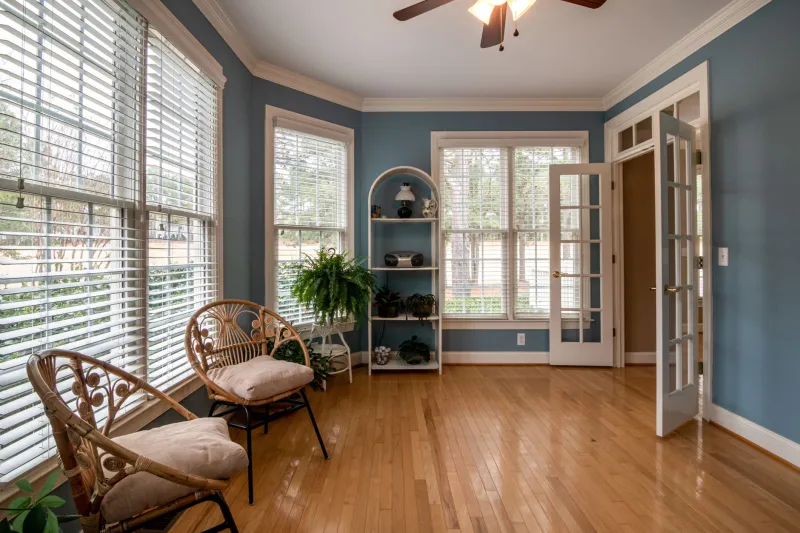
Many Indian and Filipino American homeowners are also sourcing furnishings and accent pieces that were literally designed for tropical conditions. Rattan and woven furniture that allows air to circulate. Brass and copper fixtures that handle humidity without corroding. Cotton and linen textiles in place of synthetics that trap heat.
IndiaPH Store carries a range of home goods sourced directly from Indian and Philippine artisans and makers — items that were designed from the start for exactly these conditions. A hand-woven rattan shelf from the Philippines or a brass water vessel from Rajasthan isn't just a cultural statement; it's a functional object that's been tested by generations of tropical living.
Ventilation as Architecture
Perhaps the most technically interesting adaptation is what diaspora homeowners are doing with airflow. In both Indian and Filipino vernacular architecture, ventilation is treated as a structural priority, not an afterthought.
Traditional Filipino bahay kubo design, for instance, elevates the living space off the ground to allow air to circulate underneath, reducing ground-level humidity and heat. Indian courtyard homes use a central open space to create a natural chimney effect, pulling hot air upward and out. Both strategies work with physics rather than against it.
In American homes, this translates to practical upgrades: whole-house fans that exhaust hot air from upper floors in the evenings, strategic window placement for cross-ventilation, and in some cases, interior design changes that open up floor plans to improve air movement from room to room.
Some homeowners are going further. One Indian American engineer in the Dallas suburbs installed a passive cooling system inspired by traditional stepwell architecture — a buried water feature connected to a ventilation channel that cools incoming air before it enters the house. His energy bills dropped by nearly 30 percent.
The Neighbors Are Noticing
Here's where it gets interesting for American home design more broadly. These aren't isolated experiments — they're solutions that work, visibly and measurably, and neighbors notice.
Real estate agents in high-humidity markets like the Gulf Coast and the Southeast are starting to flag "tropical-inspired ventilation features" and "covered outdoor living spaces" as selling points. Mainstream design publications are running pieces on "monsoon-proof interiors" and "heat-resilient landscaping" without necessarily crediting the cultural origins of these ideas.
But the source communities know where it comes from. And as climate patterns continue to shift — more heat, more extreme precipitation, more humidity across more of the country — the wisdom that Indian and Filipino builders developed over centuries is looking less like a cultural preference and more like the obvious answer.
Your Home, Climate-Ready
You don't need to gut-renovate your house to start applying some of these ideas. Swapping out synthetic rugs for natural fiber alternatives, adding a ceiling fan to your porch, planting shade trees on your home's sun-exposed sides, or choosing tile over carpet in high-humidity rooms are all relatively low-cost changes that make a real difference.
And if you want furnishings and home goods that were genuinely built for these conditions — not just styled to look tropical — that's exactly what IndiaPH Store is here for. Because sometimes the smartest design choice is the one that's already been field-tested for a few hundred years.