Grandma Knew Best: How Diaspora Families Are Turning Spice Shopping Into a Living Classroom
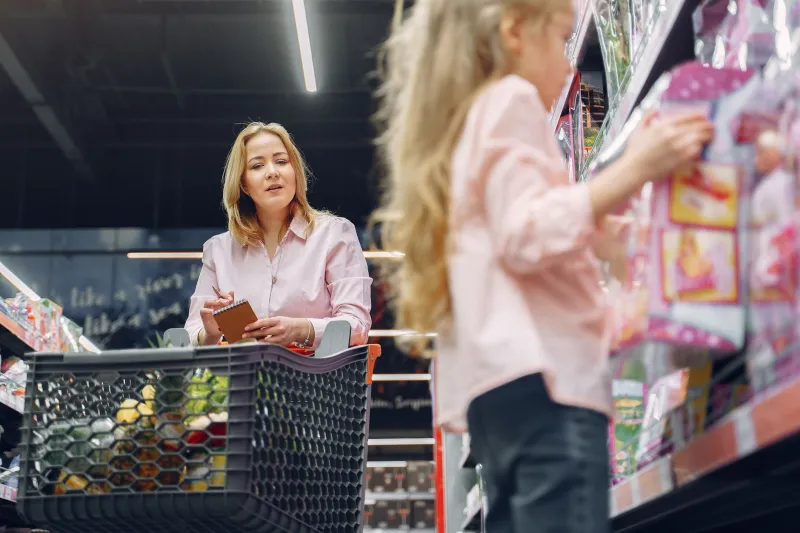
The first thing Meena Krishnamurthy does when she walks into the Indian grocery on Devon Avenue in Chicago is slow down. Not because she's tired. Because that's what her mother taught her.
"She always said, 'Don't rush the market,'" Meena recalls, her eleven-year-old daughter Priya trailing close behind. "You have to smell, touch, look. The market will tell you what it knows if you pay attention."
A few thousand miles away in spirit, Luz Reyes does something similar at a Filipino store in Daly City, California — pinching dried bagoong between her fingers, checking the color of the patis bottle against the light, and explaining every step to her teenage son Marco, who would much rather be literally anywhere else. Except, lately, he kind of doesn't mind.
"He started asking questions," Luz says with a quiet laugh. "That's when I knew it was working."
Across the United States, Indian and Filipino American families are quietly reviving something that got lost in the shuffle of assimilation: the art of shopping with intention. And they're doing it one spice aisle at a time.
More Than Grocery Runs
For a lot of diaspora kids growing up in the US, the ethnic grocery store is just a place their parents drag them to on weekends. Fluorescent lights, unfamiliar smells, long aisles of stuff they can't read. But for the parents and grandparents who grew up navigating wet markets in Chennai or Cebu, those same aisles hold a kind of encoded knowledge — a whole vocabulary of quality, freshness, origin, and trust.
Teaching that vocabulary to the next generation isn't something that happens in a classroom. It happens in the store, in real time, with actual mustard seeds in your hand.
"My lola could tell if turmeric had been cut with something just by rubbing it between her palms," says Carmela Santos, a Filipino American mom in New Jersey who now teaches her own kids the same trick. "She'd say, 'Real turmeric doesn't lie.' I didn't understand what she meant until I was an adult and bought something that was clearly fake. Then I got it."
That kind of sensory education — smell this, feel that, compare these two — is exactly what's being passed down in families like Carmela's. And it turns out it's not just about spices. It's about building a relationship with food that starts before anything ever hits the stove.
Reading the Room (and the Label)
One of the first things many parents teach their kids is how to read packaging — not just the ingredient list, but the subtext. Where was it processed? Is the country of origin listed? Does this brand have a reputation in the community?
For Indian American families, that might mean knowing which masala brands cut corners on whole spices versus which ones have been trusted for decades. For Filipino American families, it could mean understanding why one brand of coconut vinegar tastes completely different from another even when the labels look almost identical.
"I tell my kids, 'The label is the beginning, not the end,'" says Rajan Pillai, a dad in suburban Atlanta who grew up in Kerala. "You still have to open the jar and smell it. You have to know what fresh cardamom is supposed to smell like before you can recognize when something is off."
This kind of consumer literacy has a practical payoff too. Families who know what they're looking for are less likely to get burned by low-quality imports, and more likely to find the genuine article — whether that's proper Kashmiri chili or real calamansi extract — even when it's tucked behind flashier packaging.
The Haggle Is Part of the Lesson
At smaller independent stores, the transaction itself becomes part of the education. Haggling — or at minimum, building a real relationship with the vendor — is something a lot of diaspora parents actively teach.
"Back home, you knew your spice vendor," says Anita Mehta, who runs a small Indian snack business in Houston and still shops at the same family-owned store she's been going to for fifteen years. "They knew what you cooked. They'd tell you, 'This batch of jeera is really good right now,' or 'Wait two weeks, the new shipment is better.' You can't get that from a website."
She brings her kids along specifically so they'll learn to talk to vendors, ask questions, and understand that the person behind the counter often knows more than any review site. "My son thought it was embarrassing at first. Now he's the one asking about provenance. I didn't even teach him that word — he picked it up from listening."
In Filipino American households, the equivalent might be knowing the tita who runs the sari-sari section at the back of the store, or understanding that the best dried mangoes usually come from whoever just flew back from Cebu last month. Community knowledge, passed person to person, is its own kind of supply chain.
Freshness Is a Skill, Not a Given
One of the most practical things parents teach is how to assess freshness — and it's surprisingly teachable, even to reluctant teenagers.
Whole spices last longer than ground, but even whole spices have a shelf life. Cloves should feel slightly oily. Dried chilies should be pliable, not brittle. Whole coriander seeds should release fragrance when you crack them, not just smell like dust. These aren't tricks you learn from a YouTube video. They come from standing next to someone who already knows.
"I made Priya smell three different bags of cumin last week," Meena says. "One was old, one was okay, one was really fresh. She could tell the difference by the third try. That's a life skill. She'll never buy bad cumin again."
For Filipino families, the same principle applies to ingredients like dried shrimp, fish sauce, and coconut products. Real coconut milk looks different from the watered-down stuff. Proper patis has a color and clarity that tells you something about how it was made. These are things you learn by doing, not by reading.
Why This Matters Now
There's something quietly countercultural about all of this. In an era of one-click ordering and algorithm-curated shopping, taking your kid to a physical store and spending forty-five minutes in the spice aisle feels almost radical.
But the families doing it aren't trying to make a statement. They're just trying to make sure something real doesn't disappear.
"My mom's generation knew things we don't," Luz Reyes says simply. "I don't want Marco's generation to know even less. So we go to the store together. We take our time. We talk."
And sometimes, somewhere between the tamarind and the dried hibiscus, a kid who thought this was just a chore realizes it's actually something else entirely — a map to where they came from, written in flavor and fragrance, waiting to be read.