When Diwali Meets Black Friday: The Booming Celebration Economy Reshaping American Retail
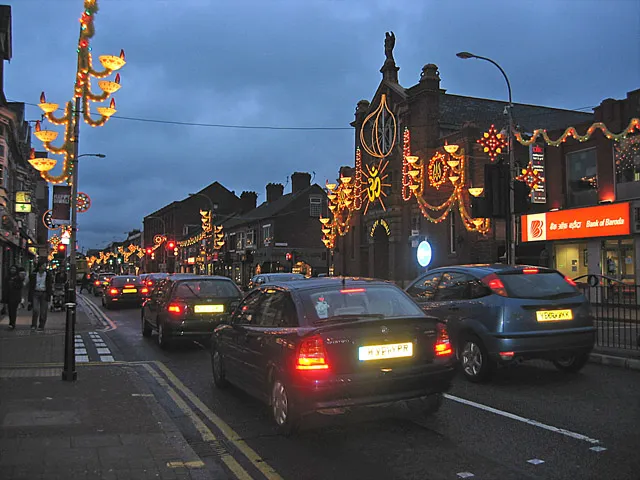
Photo: Kate Jewell, CC BY-SA 2.0, via Wikimedia Commons
Something interesting happens every October in Priya Nair's Chicago neighborhood. Her Indian-American family starts prepping for Diwali — ordering sweets, scouring for diyas, hunting down the right kurtas — at roughly the same time her Filipino neighbors are planning their Simbang Gabi countdown to Christmas and keeping an eye on Sinulog decor coming in from relatives back home. And somewhere in the middle of all that, Halloween candy is on sale at Walgreens.
This overlap isn't accidental. It's the new American celebration economy in action.
For years, mainstream retail basically ignored the festive rhythms of immigrant communities. Diwali got a brief nod in the candle aisle. Filipino Christmas traditions were invisible outside of specialty stores in Daly City or Jersey City. But that's changing — fast. And the businesses paying attention are quietly building something genuinely new.
The Calendar Is Getting Crowded (In the Best Way)
American retail has always been driven by a predictable holiday drumbeat: back-to-school, Halloween, Thanksgiving, Christmas, New Year's. But the US is a different country than it was even fifteen years ago. Indian-Americans now number over four million, and Filipino-Americans close to four and a half million. That's a combined consumer base of nearly nine million people with deep cultural ties to celebration traditions that don't neatly map onto the standard retail calendar.
Diwali, the Festival of Lights, typically falls in October or November — smack in the middle of peak retail season. Sinulog, the massive Philippine festival honoring the Santo Niño, happens in January, a month most American retailers treat as a post-holiday dead zone. Onam, Eid, Pongal, Flores de Mayo — each of these represents a spending moment that mainstream brands have historically fumbled or flat-out missed.
Savvy small business owners, many of them first- or second-generation immigrants themselves, spotted this gap years ago. Now they're filling it.
Fusion Products Are Having a Moment
Walk through any Indian or Filipino cultural market in the US right now and you'll notice something: the merchandise has gotten smarter. It's no longer just imported goods sitting on shelves waiting to be recognized. Entrepreneurs are creating products specifically designed for the hyphenated American experience.
Think Diwali gift sets that pair artisanal mithai with American-made candles in sandalwood and marigold scents. Or Filipino Christmas parol lanterns reimagined in sizes and materials that work for a suburban front porch rather than a Manila street. There are Diwali-themed greeting cards printed in English with Hindi script accents, and Sinulog-inspired jewelry that reads as festival-chic to anyone, regardless of cultural background.
This isn't dilution of culture — it's translation. And it turns out American consumers are hungry for it.
A growing segment of non-Indian, non-Filipino shoppers are actively seeking out these products, drawn by aesthetics, by curiosity, or simply because a coworker brought in Diwali sweets one year and they've been hooked ever since. The cultural moment creates the commercial moment.
Small Businesses Are the Engine
Big box retailers are starting to catch on — Target now runs Diwali promotions, and some grocery chains have expanded their international food sections around Filipino holidays — but the real innovation is happening at the small business level.
Independent sellers on platforms like Etsy and Amazon Handmade, along with specialty e-commerce shops, have built entire product lines around these celebration seasons. A Bengali-American maker in New Jersey does a roaring Diwali trade selling hand-painted clay diyas that sell out every year. A Filipino-American ceramicist in Los Angeles creates parol-inspired ornaments that show up on Christmas trees in households from Seattle to Miami.
For these entrepreneurs, the cultural calendar isn't a niche — it's a business model. And the hybrid nature of American immigrant life means their customers often want products that speak to multiple traditions at once. A Filipino-Indian household (yes, they exist, and they're a whole vibe) might want decor that works for both Diwali and the Filipino Christmas season. That's a product brief no mainstream retailer is going to crack anytime soon.
The Gifting Economy Gets an Upgrade
One underappreciated driver of this retail shift is gifting culture. Both Indian and Filipino traditions place enormous emphasis on gifts during festival seasons — not as an afterthought, but as a central expression of love, respect, and community. This isn't the grab-a-gift-card-at-checkout version of gifting. It's intentional, layered, and often involves food, textiles, and handmade goods.
For Indian diaspora families, Diwali gifting is practically a professional sport. Boxes of sweets, dry fruits, decorative items, and clothing are exchanged with family, friends, neighbors, and even work colleagues. Filipino families bring the same energy to Christmas — the holiday season starts in September (yes, really) and gift-giving is woven into nearly every gathering between then and the new year.
When these traditions land in the US, they create a spending pattern that's distinct from mainstream American gifting. The emphasis is on quality, authenticity, and meaning over convenience. That's a premium product opportunity, and the businesses that understand it are building loyal customer bases that come back year after year.
Retail Seasons Are Being Rewritten
Here's the bigger picture: the American retail calendar is quietly expanding. The Q4 holiday rush is no longer the only game in town. For businesses serving Indian and Filipino communities, there are meaningful selling moments spread across the entire year — Diwali in fall, Christmas and Sinulog in winter, Holi in spring, regional Indian harvest festivals in summer.
This calendar diversification is genuinely valuable for small businesses that struggle with the feast-or-famine cycle of traditional retail seasonality. A shop that sells Indian and Filipino cultural goods can build revenue across multiple peak moments rather than betting everything on November and December.
It also creates something culturally significant: a retail landscape that actually reflects the diversity of American life. When a Filipino grandmother in Illinois can find a proper parol for her living room, or an Indian dad in Texas can order authentic Diwali sweets online without settling for a pale imitation, that's not just commerce. That's belonging.
What This Means for American Consumer Culture
The celebration economy being built by Indian and Filipino entrepreneurs isn't a side story in American retail — it's a preview of where things are heading. As the US continues to diversify, the businesses that thrive will be the ones that understand cultural celebration as a year-round economic force, not a novelty.
The smartest players in this space aren't waiting for mainstream retail to catch up. They're building their own platforms, their own audiences, and their own versions of the holiday season — ones that feel true to who they are and what they're celebrating.
At IndiaPH Store, that's exactly the kind of energy we're here for. Two cultures, one marketplace, and a whole lot of reasons to celebrate.