Two Cultures, One Altar: How Indian-Filipino Couples Are Crafting Ceremonies That Honor Everything
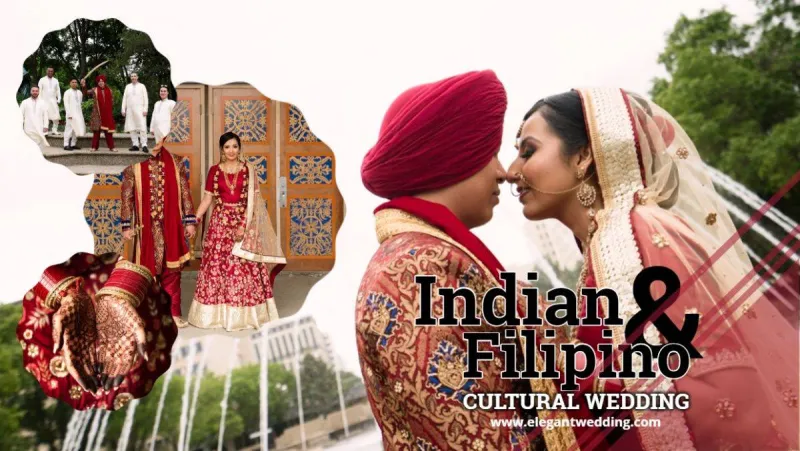
Photo: Indian Filipino intercultural wedding ceremony bride groom traditional attire, via elegantwedding.com
Somewhere in a New Jersey banquet hall last October, a groom stood in a cream-and-gold sherwani while his bride's lola pinned a delicate sampaguita into her hair. On the table nearby sat a tray of mehendi cones next to a basket of pandan-scented candles. The DJ was warming up with a playlist that moved seamlessly from Bollywood to OPM ballads. Nobody thought it was strange. In fact, everyone thought it was perfect.
This is what the modern American wedding looks like when India and the Philippines show up together.
The Couples Driving the Trend
Intercultural relationships between Indian and Filipino Americans have quietly become one of the more common cross-cultural pairings in diaspora communities—especially in cities like Los Angeles, Chicago, Houston, and the New York metro area, where both communities have deep roots. When these couples get engaged, the real conversation begins: whose traditions do we keep, whose do we adapt, and what do we build from scratch?
Priya Nair and Marco Santos, who married in San Diego two years ago, describe their planning process as "equal parts research project and therapy session." Priya's family is Tamil; Marco's family is from Cebu. Between the two of them, they were navigating a Hindu ceremony, a Catholic blessing, and two sets of parents who had very specific opinions about food, flowers, and who sits where.
"We kept hitting walls when we tried to do things separately," Priya says. "Once we started looking for the overlap—the moments where both traditions were actually saying the same thing—it got a lot easier."
That overlap is more significant than most people expect.
More in Common Than You'd Think
Both Indian and Filipino wedding cultures place enormous weight on family participation. Neither is really a "two-person event"—they're multi-generational productions where aunties have opinions, cousins have roles, and grandparents' blessings carry real ceremonial weight.
Both cultures also share a love of elaborate pre-wedding rituals. The Indian mehendi night and the Filipino despedida de soltera (bachelorette send-off) serve similar emotional functions: gathering the women of the family to mark the transition, share stories, and send the bride off with love. Many couples are now folding these into a single evening—henna stations alongside karaoke, biryani next to lechon, and flower crowns that borrow from both traditions.
Then there's the textile moment. Choosing what to wear across multiple events is where things get genuinely exciting.
The Outfit Question (There's Always an Outfit Question)
Most Indian-Filipino couples end up navigating at least three or four wardrobe changes across their wedding events. A typical lineup might include a traditional Hindu ceremony requiring a silk saree or lehenga, a Catholic or civil ceremony where a barong Tagalog or a white gown feels right, a reception that calls for something festive, and an after-party where comfort finally wins.
For grooms especially, the barong Tagalog has become a surprisingly popular crossover piece. Its lightweight, embroidered elegance translates well across cultures—it photographs beautifully, it's comfortable in warm venues, and it signals respect in a way that resonates with Indian families who understand the language of ceremonial dress.
For brides, the challenge is more layered. Many are commissioning custom pieces that pull elements from both wardrobes—a lehenga silhouette in piña fabric, or a Filipiniana cut with zardozi embroidery. Vendors who serve both communities are increasingly in demand, and online marketplaces like IndiaPH Store are making it easier to source the raw materials, accessories, and finished pieces that make these hybrid looks possible.
The Food Table Is Where Families Actually Bond
Ask any intercultural couple what surprised them most about wedding planning, and the food conversation usually tops the list—not because it's the hardest, but because it's where the real cultural diplomacy happens.
Indian wedding food is abundant, spiced, and often vegetarian-forward, especially in South Indian and Gujarati families. Filipino wedding food is a celebration of slow-cooked meats, vinegar-bright flavors, and communal feasting. Together, they're extraordinary.
Many couples are working with caterers who specialize in both cuisines, or hiring two separate food stations and letting guests graze between worlds. Paneer tikka next to kare-kare. Mango lassi alongside buko pandan dessert cups. It sounds like chaos on paper; in practice, it works because both food cultures share a commitment to generosity. Nobody leaves hungry. Nobody leaves without seconds.
Practical Advice for Families in the Middle of It
If you're currently in the thick of planning one of these weddings—or supporting a family member who is—here's what couples who've done it say actually helps:
Start with the non-negotiables, not the wish list. Each family should identify the two or three moments that are truly sacred to them. Everything else is negotiable. This narrows the conversation fast.
Find a coordinator who gets both cultures. A planner who has worked with both Indian and Filipino families is worth every penny. They've already solved most of the logistical puzzles you're about to encounter.
Shop with intention. Sourcing decor, fabrics, and ceremonial items from vendors who understand both traditions saves enormous time and often produces more authentic results. IndiaPH Store carries a curated selection of items that speak to both aesthetics—whether you're looking for marigold garlands for a mandap or parol-inspired lanterns for a reception entrance.
Let the kids explain it. Seriously. If you're struggling to get two sets of parents aligned, let the couple walk each family through the other culture's rituals before the wedding. Understanding why something matters changes the whole conversation.
What These Weddings Are Really Saying
At their core, Indian-Filipino intercultural weddings aren't just logistical achievements. They're a statement about what it means to be American in the 21st century—to hold multiple identities with equal pride, to refuse the idea that honoring one heritage means erasing another.
These celebrations are also, quietly, community-building events. Guests who've never tried halwa try it. Guests who've never heard a kundiman hear one. Cousins from Chennai and cousins from Quezon City end up on the same dance floor, and something shifts.
That's the thing about weddings done right: they don't just mark a union between two people. They introduce two worlds to each other.
And when those worlds are India and the Philippines, meeting in America, the introduction tends to be unforgettable.