Turn It Up: Why Indian and Filipino Americans Are Done Celebrating in Whispers
Somewhere in a suburb outside Houston, a neighbor once called the police because a family was lighting diyas on their front porch. Not fireworks. Not a bonfire. Little clay lamps, lined up quietly along a driveway.
In a neighborhood near Sacramento, a Filipino American family was asked by their HOA to "minimize outdoor activity" during a backyard celebration of Sinulog. The music, a board member wrote in a formal letter, was "culturally unfamiliar and therefore disruptive."
These aren't isolated incidents. Ask around in any Indian or Filipino American community and you'll collect stories like these — small moments of erasure that add up to a larger, louder message: keep it inside, keep it down, keep it to yourself.
A growing number of families and community organizers have decided they're done with that arrangement.
The Pressure to Assimilate Quietly
Immigrant communities in America have long navigated an unspoken bargain: you can be here, but don't take up too much space. Celebrate, sure — just not where anyone can see it. Cook your food, but maybe crack a window. Play your music, but keep the volume low enough that no one has to acknowledge it exists.
For Indian and Filipino Americans specifically, this pressure has historically been intense. Both communities arrived in large numbers through professional visa pathways — engineers, nurses, doctors — and many absorbed the idea that being a "model minority" meant blending in. Celebrating quietly felt like part of the deal.
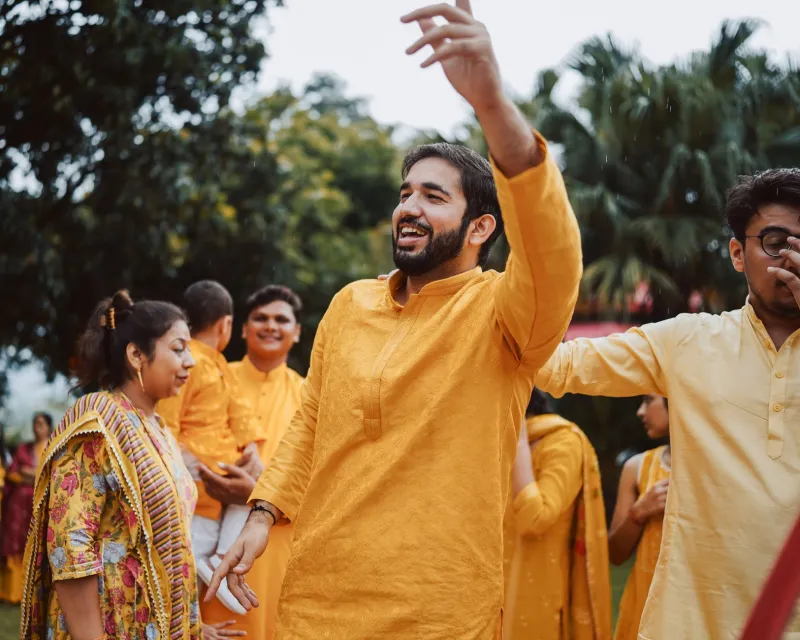
But something has shifted. The generation that grew up watching their parents dim their own culture is now the one organizing the Holi runs, filing the parade permits, and showing up to city council meetings to argue for street closures.
"My parents would never have done this," says Priya Nair, a community organizer in the Chicago suburbs who helped coordinate a public Holi event that drew over 800 people last spring. "They celebrated inside the temple, inside someone's basement. I love that about them, but I also think they deserved more. We all deserved more."
What's Actually at Stake When You Go Public
There's a real difference between a cultural celebration held in a private hall and one that spills into a public park. The stakes are higher, the logistics are harder, and the visibility cuts both ways — it invites connection, but it also invites friction.
Community organizers across the country have learned this the hard way. Permit processes that take months. Insurance requirements that price out smaller community groups. Noise ordinances applied selectively in ways that feel anything but neutral.
In New Jersey, a Filipino American civic group spent nearly two years trying to get city approval for a street procession modeled on the Sinulog festival from Cebu. They were repeatedly asked to reduce the number of participants, shorten the route, and limit the drumming. "Every meeting, there was another condition," recalls Dante Cruz, one of the group's founders. "At some point you realize the conditions aren't really about logistics. They're about whether the city actually wants to see you."
They eventually got their permit. The procession happened. And the following year, the city asked them to come back.
Color, Sound, and the Right to Be Seen
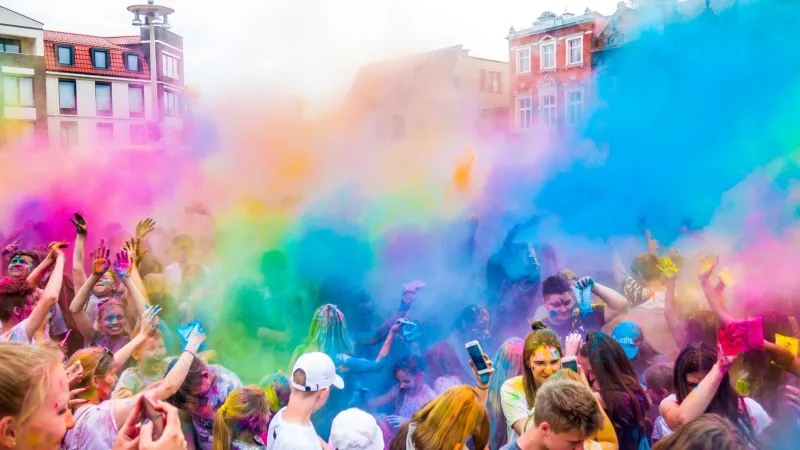
What makes Indian and Filipino celebrations particularly visible — and therefore particularly contested — is that they're sensory experiences. Holi isn't just a holiday; it's a cloud of magenta and yellow powder that stains the air. Diwali isn't just a festival; it's light and sound that carries across entire blocks. Sinulog isn't just a commemoration; it's a procession with percussion that you feel in your chest.
These aren't celebrations designed to be contained. They were built for open air, for streets, for the kind of shared public space that American suburbs often treat as neutral territory — which, of course, it never actually is.
"American public space isn't neutral," says Dr. Meena Rao, a cultural studies researcher who has studied diaspora celebrations in the Midwest. "It reflects a particular set of norms about what belongs there. When communities push back against those norms, it reads as disruption even when it's just difference."
The pushback, when it comes, often arrives wrapped in the language of noise complaints or permit technicalities. But community members are increasingly willing to name what's actually happening — and to organize around it.
The HOA Problem (and How People Are Solving It)
Few institutions have become as symbolically loaded for immigrant communities as the homeowners association. HOA restrictions on outdoor decorations, gatherings, and noise have disproportionately impacted communities whose celebrations don't fit the aesthetic of the neighborhood's founding demographic.
In response, some Indian and Filipino American families have gotten creative. Community WhatsApp groups share templates for challenging discriminatory HOA rules. Some neighborhoods have organized enough to vote in board members who reflect the community's actual composition. Others have simply started hosting events at community parks and cultural centers instead — trading the intimacy of the backyard for the political statement of public space.
"We stopped asking permission," says Ananya Krishnan, who helped organize a neighborhood Navratri garba in a public park in the Atlanta metro area. "We filed our permits, we followed the rules, and we showed up. Hundreds of people. Our neighbors saw us. Some of them joined in."
That last part — neighbors joining in — comes up again and again. Because what often happens when communities stop hiding their celebrations is that the feared hostility doesn't always materialize. Sometimes curiosity does instead.
Loud Is a Form of Love
There's a reason these celebrations are the way they are. The volume, the color, the crowd — none of it is accidental. Holi's chaos is the point. Sinulog's percussion carries centuries of devotion. Diwali's lights were never meant to be subtle.
For diaspora families, maintaining that intensity isn't just about cultural preservation in the abstract. It's about giving their kids something real — not a watered-down version of their heritage, but the actual thing, the full-volume version, the one that makes your heart beat faster.
"I want my daughter to know what it feels like to be in a crowd of people celebrating the same thing she is," says Priya Nair. "I want her to know that our joy is allowed to be big."
At IndiaPH Store, we believe that cultural pride doesn't come with a volume knob — and that the items you wear, cook with, and decorate your home with are part of the same story these organizers are telling. The dhol and the kulintang. The rangoli powder and the parol. The noise your neighbors don't understand is, more often than not, the sound of people who are deeply, unapologetically home.